Roof Inspection: The First Step After Storm Damage
Storm damage rarely shows up as one clean, obvious problem. Even when the roof looks mostly intact from the street, wind-driven rain and hail can work their way into hidden weak points, especially at seams, penetrations, and flashings. That is why a roof inspection is the first step after storm damage. It is also why homeowners and commercial property managers get better outcomes when they treat the inspection as more than a quick look from the ground.
A professional roof inspection sets the scope for the next decision: roof repair, emergency roof repair, or roof replacement. It also reduces the chance of paying twice, which happens when a patch is made without understanding what the storm actually changed beneath the surface.
Why the first inspection matters more than the first patch
After a storm, the most tempting move is to address what you can see right away. A missing shingle. A stain on the ceiling. A damp spot near a vent. These are real clues, but they are also delayed signals. Water can travel along decking, under roofing layers, and through openings long before it stains drywall or creates a visible leak.
Manufacturers and industry guidance consistently point to the same core idea: major roofing issues are often better handled when a professional contractor evaluates whether repair or replacement is appropriate for the condition and the extent of damage. Put differently, the “best” choice depends on what the inspection reveals, not what the first symptom suggests.
There is also a practical reason inspections pay off. Roof replacement includes more than swapping the top layer. A typical roof replacement process involves removing old materials, installing new underlayment and roofing materials, replacing flashings and ridge caps, and cleaning up the site. If the storm damage is limited and the rest of the system is in good condition, a full replacement may be unnecessary. If the storm caused widespread deterioration or recurring leaks, repairs may only postpone a larger project.
What a professional roof inspection actually looks for
A good roof inspection after storm damage is not just about identifying where damage exists. It is about identifying how the damage could affect the roof during the next rain, wind event, or freeze-thaw cycle. A contractor typically evaluates visible areas and then checks for signs of intrusion, failure at transitions, and conditions that might worsen over time.
You can think of the inspection as three layers of questions.
First, where did the storm impact land? Wind and hail often create patterns. High-wind events can lift or dislodge edges and components. Hail can damage surfaces even when the roof does not look dramatically broken from a distance.
Second, what changed underneath the surface? Roofing systems rely on layered protection. If the storm compromised the top layer, the underlayment, flashing seals, and the roof deck can be at risk. This is why a “small” area of visible damage can sometimes point to a larger problem.
Third, does the roof’s age and overall condition affect what should happen next? A common rule of thumb is that small, isolated problems can often be repaired, while older roofs, widespread damage, recurring leaks, or multiple trouble spots may justify replacement. This is where your contractor’s judgment becomes critical, because the storm damage is only part of the story. Roof age and the number of affected areas influence how durable a repair will be.
Storm damage signs that often get missed
Even with a careful homeowner walk-through, it is easy to miss damage that sits at the margins of the system. Some of the most important roof components are exactly the ones people rarely inspect: flashing details, vents, skylight curbs, chimney transitions, and the edges where water is guided away.
In residential settings, roofs are commonly built with asphalt shingle roofing. Asphalt shingles are the dominant roofing material in the U.S., and one cited research estimate shows they accounted for 70% of roofing material volume used in single- and multi-family new construction and related repair and replacement projects. That matters because shingle roofs are widespread, and storm damage evaluation has established patterns.
In commercial properties, the inspection changes slightly because the systems differ. Low-slope flat roof installation and repair often uses materials like TPO roofing installation, EPDM commercial roofing, modified bitumen roofing, PVC roofing, and commercial metal roofing. A contractor evaluating commercial roof repair or commercial roof replacement looks for failures that can be less obvious than a missing shingle, such as blistering, edge lift, seam degradation, ponding-related issues, or damage around roof penetrations.
Repair vs. Roof replacement, and why “it depends” is not a dodge
When people hear the phrase “repair or replacement,” they often assume it is a sales decision. In reality, the decision is usually a risk and durability decision. The goal is not simply to stop the leak today, it is to choose the most appropriate path for the roof’s condition after the storm.
Industry guidance often frames the decision around extent and recurrence. A typical rule of thumb is:
- small, isolated problems may be repairable
- older roofs, widespread damage, recurring leaks, or multiple trouble spots may justify replacement
That rule aligns with a broader concept from risk-focused roofing guidance: properly designed, installed, and maintained roofs can reduce damage from hazards like wind, rain, hail, ice, snow, and fire, and post-event evaluation can identify cases where repair is preferable to full replacement. The key is that post-event evaluation is what your inspection delivers.
A useful way to think about it is to separate “where the leak is” from “what caused the leak” and “what else is compromised.” If only one flashing detail is failing, roof leak repair may resolve the problem. If several areas show failure, the deck and underlayment may have absorbed moisture, or the system may be nearing the end of its serviceable life, then roof replacement after leak becomes the more stable choice.
Age is not just a number
For asphalt shingle roofing, one cited estimate places typical service life at about 20 to 30 years, depending on conditions. If your asphalt shingle roof is within that range and the storm created widespread damage, replacement can be more sensible than patching. If the roof is relatively young and the damage is localized, roof repair is often the better first move.
For homeowners dealing with aging roof replacement, the inspection can also clarify whether the storm triggered a failure that was already developing due to normal wear. That is a subtle distinction, but it affects the scope of work.
What to do immediately after storm damage, before the inspection
The inspection is the first step, but the hours right after the storm matter too. Your goal is to limit water intrusion and document conditions so the inspection can be accurate.
Here is a short checklist you can follow before the contractor arrives.
- Take photos of visible damage, including roof areas from safe angles and any interior water stains or drips
- If water is active indoors, place a bucket to catch runoff and protect flooring or belongings
- Avoid walking on damaged areas, especially if shingles look loose or if hail damage is suspected
- Note the storm timing and what you observed, for example wind gusts, hail size, and how quickly leaks started
- Keep gutters and downspouts in mind, but do not try to “fix” the roof yourself if it requires climbing onto compromised sections
This is also a good moment to ask yourself a question that contractors appreciate: is the problem still actively leaking? An inspection paired with emergency roof repair when needed can prevent interior damage from expanding while the full scope is determined.
Residential and commercial inspection: what changes
Residential roof inspection and commercial roof inspection both aim to answer repair versus replacement, but the systems and risk profiles can differ.
Residential: common outcomes and typical materials
Many residential roofs are built with asphalt shingle roofing. That also means many storm-damage scenarios revolve around shingle loss, surface impacts, and failures around vents and edges. Asphalt shingle roof replacement is often discussed when damage is widespread or when multiple trouble spots appear across the roof plane.
If you are hearing the phrase “asphalt shingle roof replacement” after an inspection, it may reflect more than storm impact. It can also reflect the overall condition of the roof deck, underlayment, and flashing details, especially when leaks show up after repeated storms.
Some homes use slate roof installation and repair, tile roof TPO roof system installation installation and repair, wood shake roofing, or cedar shake roofing, each with its own failure behavior under hail and wind. For those materials, an inspection focuses heavily on individual units and the supporting layers beneath. Even without inventing specifics, the practical point remains: the way damage is distributed influences whether replacement is required or whether roof repair can restore the system reliably.
Commercial: low-slope systems and layered risk
Commercial roof installation and repair often means low-slope flat roof installation and repair, with materials like TPO, EPDM, modified bitumen, and PVC. Commercial metal roofing can also show up on warehouses and multi-tenant properties.
In commercial settings, storm evaluation also includes how water behaves across the roof surface. Low-slope systems are designed for drainage, but wind-driven damage can create pathways for water intrusion. Fire damage roof replacement is sometimes discussed as a separate category of risk, but the inspection logic is similar: you evaluate what the hazard changed, then you choose the repair or roof replacement route based on whether the damage is localized or systemic.
If your building has a history of recurring leaks, the inspection becomes even more decisive. Recurrence is one of the factors that often pushes the decision toward a full commercial roof replacement rather than repeated patchwork.
The inspection report that should guide your next step
After a thorough roof inspection, you should receive enough clarity to make a decision without guesswork. While contractors format reports differently, the content usually needs to answer three practical questions:
- What parts of the roof were affected by the storm?
- What evidence shows water intrusion risk now or later?
- Does the overall roof condition suggest repair durability or an aging roof replacement plan?
If the inspection is paired with emergency roof repair, there should also be a clear separation between temporary mitigation and permanent restoration. A repair that only treats the visible symptom without addressing the underlying cause tends to fail sooner than expected.
For commercial roof repair and commercial roof replacement decisions, the scope should also align with how the roofing system is built, including how seams, edges, penetrations, and flashings are treated. In roofing systems, those details are often where storms do the most damage.
Roof replacement cost: why inspection drives the price more than the material name
People often ask about roof replacement cost right away, and it is understandable. The financial pressure after storm damage is real. For asphalt shingle roof replacement specifically, one cited figure places an average 2023 roof replacement cost for an asphalt shingle roof at $14,959. Actual costs vary widely based on roof size, materials, and project complexity.
An inspection matters because it determines complexity. Two roofs with the same footprint can cost differently if one has hidden intrusion that requires additional deck work, more extensive flashing replacement, or multiple affected areas that expand the scope. It also matters because the decision between roof repair and roof replacement directly changes the scope.
It is also worth noting the language people use. Someone may call it “roof replacement,” but if the inspection determines only specific components need work, the project may be better described as roof repair or targeted roof leak repair with selective component replacement. You should expect a contractor to explain what is being replaced and why, not just name a material type.
Common storm-triggered scopes, and how contractors estimate them
A lot of confusion comes from how storm damage changes the layers of a roof system. A typical roof replacement includes removing old roofing materials, installing new underlayment and roofing materials, replacing flashings and ridge caps, and cleaning up the site. That sequence is part of why replacement is more than “putting on a new top.”
If your contractor recommends roof replacement after leak, they are typically pointing to a combination of factors the inspection reveals, such as evidence of moisture intrusion or compromised system components.
In some cases, a roof repair can be the right path even after a significant storm. The key is whether the damage is isolated and whether the rest of the system can still perform as intended. If the roof shows multiple trouble spots or the damage is widespread, replacement tends to become the more durable option.
Real-world judgment calls: edge cases contractors run into
The inspection is not a purely mechanical process. Contractors constantly make judgment calls based on what they see, how the system is built, and how water likely moved during the storm. A few edge cases come up often.
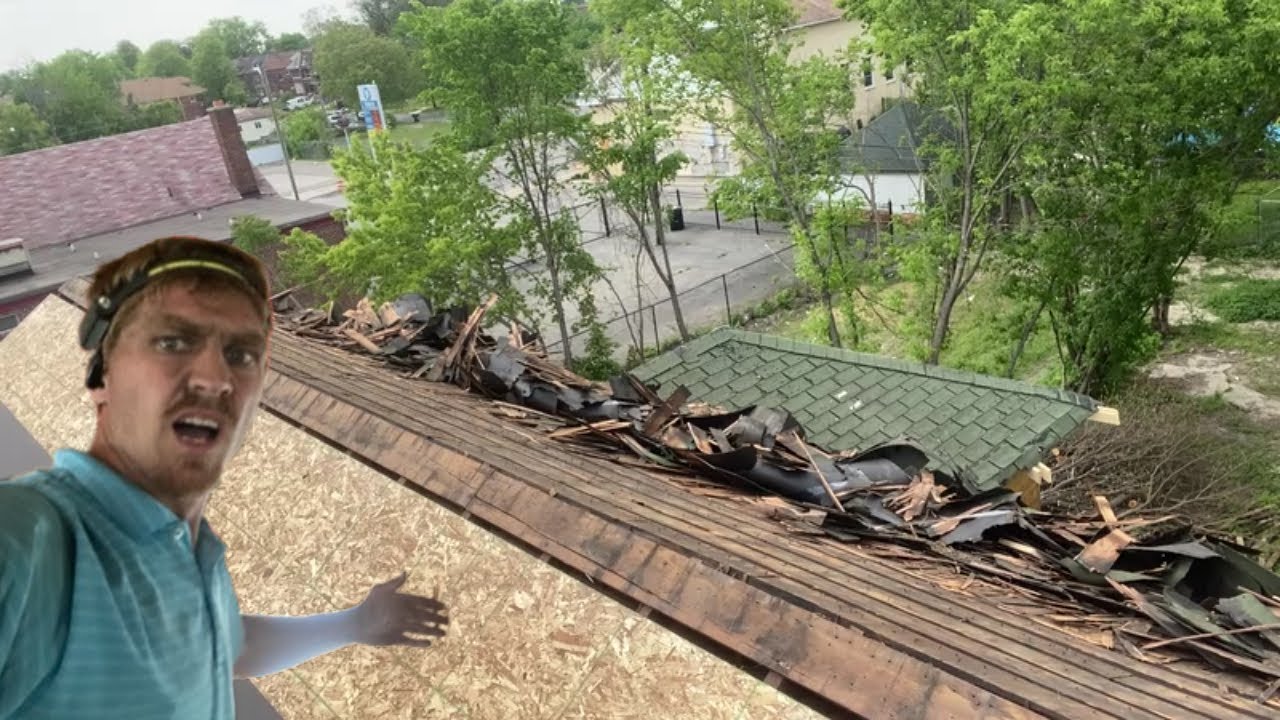
Sometimes the roof looks “okay,” but the interior tells a different story. A stain may appear days after the storm, near a penetration or along an interior wall that does not seem directly under a visibly damaged roof area. In those situations, the inspection often includes evaluating likely water pathways, not just the leak location.
Other times, the damage looks dramatic in a couple of zones, but those zones align with a roof section that is older or already aging toward replacement. A patch might stop water temporarily, but it may not restore the system’s long-term integrity if the surrounding materials have degraded.
For commercial properties, edge cases can include roof sections with different ages due to prior repairs. A contractor might find that a portion of a commercial roof has been patched before, and now the storm exposed seam weaknesses or flashing transitions. That can shift the decision toward commercial roof replacement even if only part of the roof appears damaged.
Coordinating inspection with the practical needs of homeowners and businesses
Storm damage creates urgency. People want action, and in many cases that action begins with emergency roof repair to prevent further intrusion. But urgency should not replace clarity.
If you are a homeowner, the inspection should help you plan around timelines, contents protection, and indoor drying needs. If you are managing a commercial property, it also affects tenant safety, business continuity, and access scheduling.
A well-run inspection helps you avoid another common problem: doing repairs without understanding the full scope. The most expensive repairs are often the ones that address only what was easiest to see at first.
Choosing the right material only after the inspection confirms the need
Many roof types have established roles in different climates and roof geometries. After storm damage, it is tempting to jump straight to material selection. Still, inspection should lead the process, because repair vs replacement determines what material decisions even make sense.
If a full replacement is needed, your contractor may discuss options that fit the roof system and the building’s needs, such as:
- TPO roofing installation for many low-slope commercial applications
- EPDM commercial roofing when appropriate for the system design
- modified bitumen roofing or PVC roofing for certain flat roof installation and repair scenarios
- commercial metal roofing when the building design calls for it
For residential properties, options can include asphalt shingles, slate roof installation and repair, tile roof installation and repair, wood shake roofing, and cedar shake roofing. The important point is that these material categories are not interchangeable in how they perform when a storm hits. That is another reason the inspection matters first. It tells you what must be restored, and therefore what system approach will hold up.
After the inspection: what “good repair” and “good replacement” have in common
Even though the decision may end in roof repair or roof replacement, the work should share a few fundamentals: correct handling of flashings and transitions, correct underlayer protection, and attention to details that keep water from finding the next pathway.
In roof replacement scenarios, that often includes replacing components like flashings and ridge caps as part of the documented replacement sequence. In roof repair scenarios, it includes addressing the actual failure point. If an inspection shows storm damage at specific junctions, the repair should work at those junctions, not only over them.
If you are evaluating roofing companies after storm damage, ask questions that force clarity, like what areas were inspected up close versus from the ground, what evidence supports repair versus replacement, and what the plan is if interior leaks appear after the initial mitigation.
A short guide to the decision you will be making
You will usually make the repair versus replacement decision by combining the inspection findings with the roof’s age and overall condition. Industry guidance supports the broad pattern: localized damage on a relatively newer roof can often be handled with repair, while older roofs, widespread damage, recurring leaks, or multiple trouble spots may justify replacement.
Here is a second short checklist that can help you interpret the recommendation you receive.
- Does the contractor describe whether damage is localized or widespread?
- Do they connect interior leak evidence to the roof areas that could cause it?
- If repair is suggested, do they explain why the rest of the system is still expected to hold up?
- If replacement is suggested, do they point to multiple affected areas or factors like roof age and recurrence?
- Do they clearly separate emergency roof repair from the longer-term permanent work?
If the answers are vague, that is your signal to ask for clarification, request photos, or schedule a follow-up inspection focused on the decision points.
When you should treat it as urgent emergency roof repair
Not every storm-related issue can wait for a scheduled inspection appointment. If there is active water intrusion inside, persistent drips, soaked insulation, or visible water spreading across interior surfaces, treat it as urgent emergency roof repair. The goal is to limit damage while the full inspection confirms scope for roof repair or commercial roof replacement.
This urgency does not replace the need for the thorough evaluation. It just prevents additional loss while the contractor determines how extensive the roof damage truly is.
Final takeaway: inspect first, then decide with confidence
Storm damage changes roofs in ways that are sometimes hidden until the next rain or the next temperature shift. A roof inspection is the first step because it translates what happened during the storm into a decision you can act on: roof repair, roof leak repair, emergency roof repair, or roof replacement.
When the inspection finds small, isolated issues, repair can be the smart path. When it finds older roof conditions, widespread damage, recurring leaks, or multiple trouble spots, replacement becomes the more durable option. And because roof replacement includes removing old materials and replacing underlayment and key components like flashings, the inspection findings matter directly for both quality and cost expectations.
Whether you manage a residential asphalt shingle roof that may be nearing its typical 20 to 30 year service window, or a commercial flat roof system built with TPO, EPDM, modified bitumen, PVC, or metal, the same principle holds: the roof inspection is where the real work begins.